
What the September 3 hail in Fulshear means for your roof.
The storm gives you a reason to look. Your roof still needs its own answer.
In this guide
The short answer
Radar-estimated hail data showed hail up to 1.75 inches over Fulshear, Cross Creek Ranch, Weston Lakes and Tamarron around 1:40 p.m. on September 3, 2026. That is useful weather context. It is not proof that your roof was damaged.
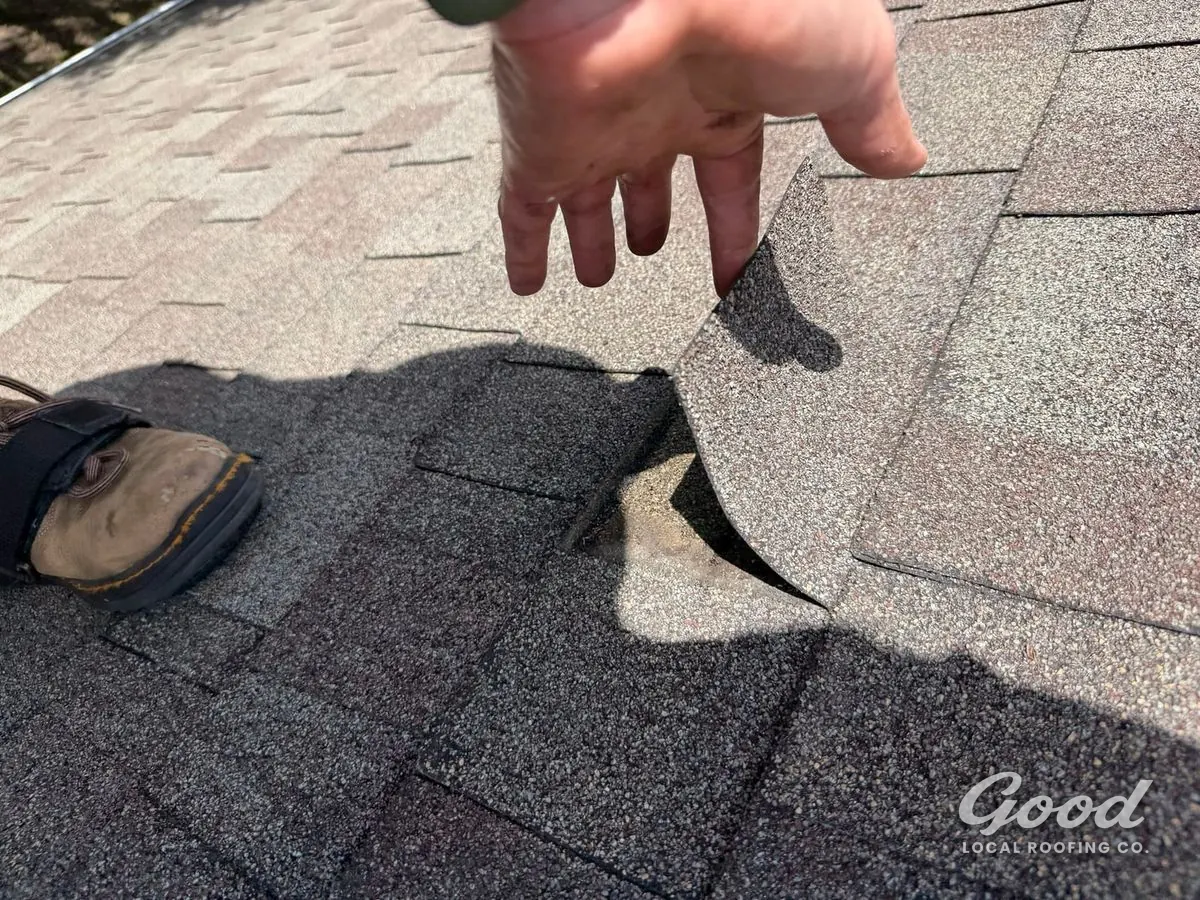
Hail can affect one roof differently from another. Roof shape, exposure and the condition already present all matter when a roofer looks at a specific house. The right next step is not to assume the roof is ruined. It is to check for changes, keep your observations simple and arrange a roof-level inspection if you have a concern.
Hail bruising can be hard to see from the ground. That is why a clean-looking roofline from the driveway does not settle the question. Stay off the roof. A free inspection can give you photos and a plain explanation of what was found.
A storm map tells you where weather passed. An inspection tells you what is on your roof.
What the storm record says
The local record is specific about the weather: radar estimates showed hail up to 1.75 inches over Fulshear and the named nearby communities at about 1:40 in the afternoon. It does not say that every house beneath the storm received the same hail or that every shingle roof needs work.
Use the date and time as the start of your notes. If you saw hail at your home, write down what you observed. Keep any safe ground-level photos you already took. If you noticed no leak, missing material or debris afterward, record that too. A calm, dated note is more useful than trying to turn a radar report into a roof diagnosis.
Do not let a door knock or a neighbor's result decide what happened at your address. Cross Creek Ranch, Weston Lakes and Tamarron were in the radar area, but each roof still needs a property-specific look. The same is true throughout Fulshear.
What to check safely from the ground
Start where your feet can stay on solid ground. Walk around the house only where it is safe. Look for material on the lawn, pieces near downspouts, or a change along the roof edge. From inside, look for a new ceiling stain or water that appeared after the storm. Do not climb a ladder for a better photo.
Check the places where you normally notice water first: ceilings, attic access areas you can view safely, and the edges around windows. A symptom inside does not prove hail caused it. It is still worth noting because it helps the roofer connect the timing, the location and the exterior conditions.
Take pictures only from safe positions. Include a wide view so the location makes sense, then a closer view if you can get it without stretching, climbing or entering an unsafe area. Save the original files. Avoid drawing circles on the only copy; keep an unmarked version.
If water is actively coming in, move people and belongings away from the wet area when you can do so safely. Stay clear of a sagging ceiling or water near electrical equipment. Call (346) 646-6484 to discuss the immediate roofing step.
What a roof inspection should answer
A useful inspection separates observed conditions from the storm story. Ask the roofer to show you the photos and explain where each photo was taken. Ask what appears recent, what may have been present before September 3, and what cannot be determined from appearance alone.
The explanation should cover the shingles and the roof details that can be accessed. It should say whether a repair, replacement discussion or no immediate work is supported by what was found. If there is uncertainty, the roofer should say so. A confident sales sentence is not a substitute for a documented condition.
Ask for the answer in plain language. What was found? Where is it? What work, if any, is recommended? What is outside the proposed scope? Those questions help you compare a construction recommendation without needing to become a roofing expert.
Good Local Roofing Company offers free residential roof inspections. We document visible conditions, provide roofing scopes and explain construction options. We do not make insurance coverage decisions.
When to call
Call now if water is entering the house or if material has come loose. Call soon if you noticed a new stain, a change along the roof edge, or storm debris that raises a question. You can also schedule an inspection when nothing obvious is visible but you want a roof-level check after the recorded hail.
You do not need to wait for a leak. Hail bruising is hard to see from the ground and can show up months later as a leak. You also do not need to assume that delayed leaking will happen. An inspection is how you replace both guesses with current information.
For a Fulshear-specific overview, visit our Fulshear roofing page. For the broader process after severe weather, read our storm-related roof inspection guidance.
Keep the insurance line clear
If you are considering an insurance claim, read your policy and speak with your insurer about coverage, notice and claim steps. Good Local Roofing Company is a roofing contractor, not a public adjuster. We can document roof conditions and provide a construction estimate. Coverage and claim decisions stay between you and your insurer.
Do not ask a roofer to promise what an insurer will pay. Ask for an accurate construction scope and photos tied to your property. Keep copies of your own notes and the inspection material. That gives each party the information that belongs in its lane.
Our office is at 15002 Lakefair Dr, Suite 102, Richmond, TX 77406. We serve residential roofing needs in Fulshear and nearby Fort Bend communities. Call now at (346) 646-6484.
Good questions
Does the Fulshear radar report prove my roof has hail damage?
No. It shows weather context for the area. It does not prove what happened to a particular roof. A property-specific inspection is needed to document visible roof conditions.
Can I tell from the driveway whether the shingles are bruised?
Not reliably. Hail bruising can be hard to see from the ground. Stay off the roof and use a professional roof-level inspection if you want the condition checked.
Should I call if I do not have a leak?
You can. A recorded hail event and a concern about your roof are reasonable reasons to request an inspection. The result may be a recommendation for work, monitoring or no immediate roofing work.
Will Good Local Roofing handle my insurance claim?
No. We are a roofing contractor, not a public adjuster. We document visible roof conditions and provide construction estimates. Your insurer decides coverage and the claim.
How do I schedule the free inspection?
Use the contact link below or call (346) 646-6484. Share the property address, what you noticed and whether water is actively entering the home.
Sources & useful reading
- Good Local Roofing: Fulshear service area and September 3, 2026 storm record
- Good Local Roofing: storm-related roof inspections
- Good Local Roofing: instant roof price
Reviewed October 14, 2026. Radar and storm reports are weather context, not proof that a specific roof was damaged.
Contractor services only; Good Local Roofing Company does not act as a public insurance adjuster. Coverage and claim decisions belong with you and your insurer.